The invasive spongy moth and its caterpillars can decimate a garden, forest, or agricultural area with surprising speed. These voracious insects have been spreading across the eastern United States for decades, and their populations have been reaching outbreak levels in recent years. If you're dealing with a spongy moth infestation, here's how to fight back effectively.
Understanding the Spongy Moth Threat
Spongy moths, scientifically known as Lymantria dispar, have become one of the most destructive forest pests in the eastern United States. Originally introduced from Europe in the 1860s, they have gradually spread throughout the region, establishing populations wherever conditions allow them to thrive. These invasive insects have no natural predators in North America, making them particularly challenging to control.
Identifying Spongy Moths and Their Egg Masses
Learning to identify spongy moths at various life stages is crucial for early detection and treatment. Adult female moths are large, white or cream-colored insects with dark markings, while males are smaller and grayish-brown. However, the most telling sign of infestation is the presence of egg masses, which appear as tan or brownish, fuzzy clusters about the size of a grape. These egg masses are typically found on tree trunks, branches, landscaping materials, or other protected surfaces.
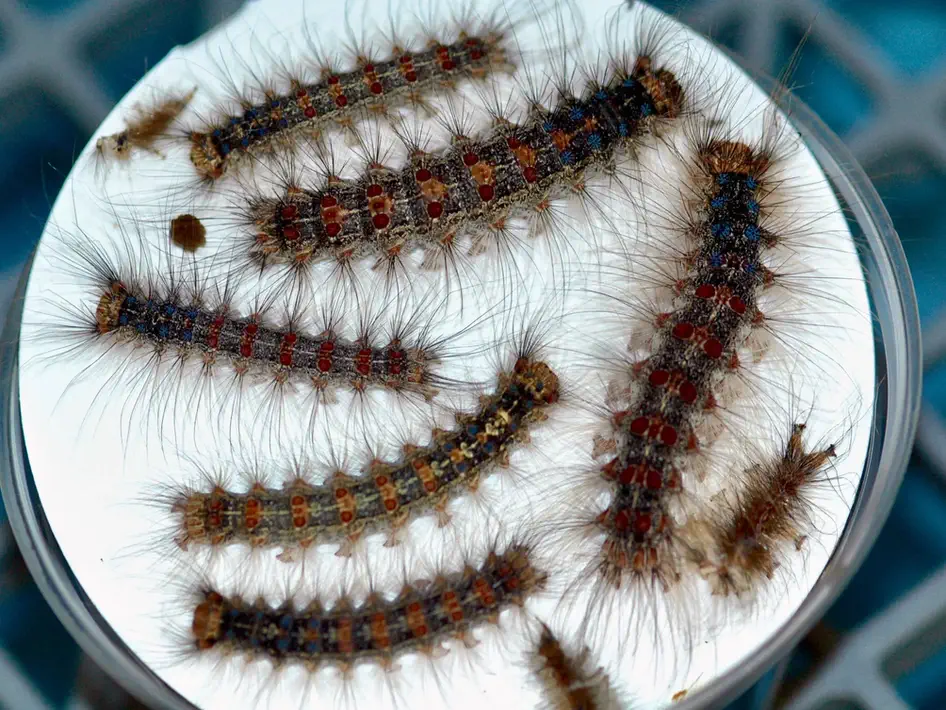
The caterpillars are equally distinctive, featuring dark coloring with distinctive pairs of blue and red bumps running down their backs. These caterpillars can grow quite large and are extremely mobile, capable of crawling significant distances in search of food.
Oak Trees: A Primary Target
While spongy moths will feed on a wide variety of trees and plants, they show a particular preference for oak trees. Oak forests in affected areas can suffer devastating defoliation during peak outbreak years. The loss of foliage weakens trees, making them susceptible to disease and other stressors. Beyond oaks, these caterpillars will feed on birch, aspen, crabapple, and numerous other tree species.
The Cascading Environmental Impact
When spongy moth populations reach outbreak levels, the environmental impacts are severe. Complete defoliation of forest canopies can occur, disrupting entire ecosystems. The loss of leaves reduces photosynthesis capacity, weakening trees and making them vulnerable to secondary pest infestations and diseases. Wildlife that depends on healthy forests for food and habitat is also affected. In severe cases, affected trees may die, particularly if they experience multiple years of heavy defoliation.
Professional Drone-Based Treatment Solutions
Traditional methods of controlling spongy moth populations—such as spraying from ground equipment or even manned aircraft—are expensive, dangerous, or impractical in many situations. This is where modern drone technology revolutionizes pest management. Drones can deliver specialized treatments with precision, reaching areas that would be difficult or impossible to treat using conventional methods.
Professional aerial spraying using drones applies insecticides like Btk (Bacillus thuringiensis subspecies kurstaki) directly to affected areas. Btk is a naturally occurring soil bacterium that is highly effective against caterpillars but is non-toxic to humans, mammals, birds, and beneficial insects. When caterpillars ingest Btk, it damages their digestive system, causing them to stop feeding and eventually die.
Why Choose Professional Treatment?
Attempting to manage a spongy moth infestation on your own can be frustrating and ineffective. Professional drone-based treatment offers several advantages: precision application that targets only affected areas, cost-effectiveness compared to other aerial options, minimal environmental impact, and the expertise to ensure treatments are applied at the optimal time for maximum effectiveness.
Contact CNY Drone Services
If you're dealing with spongy moths on your property, don't wait for the problem to worsen. CNY Drone Services offers professional drone-based treatment for invasive insects across New York State and the Northeast. Our experienced team can assess your situation, develop a targeted treatment plan, and eliminate the infestation before it causes permanent damage to your landscape or forest.