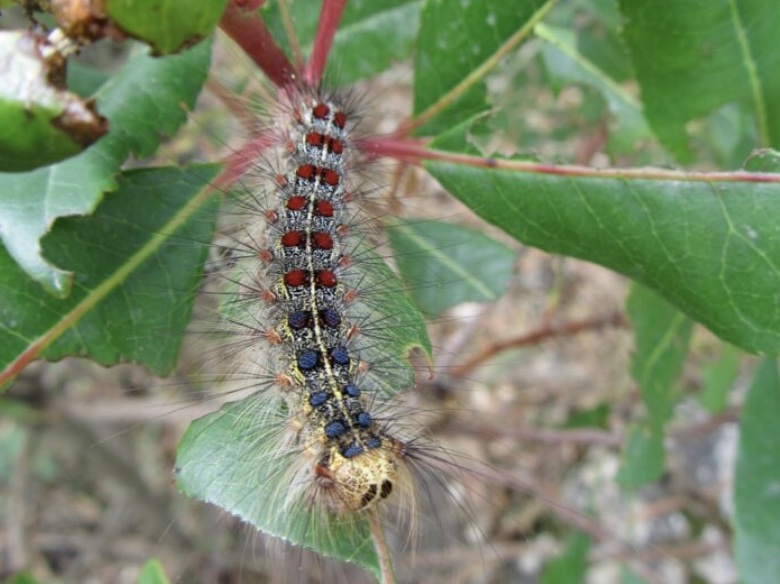
Living in the Finger Lakes region, you may know that spongy moths—also called gypsy moths—show up en masse starting in the spring and remove the leaves from trees and other plants. If you've seen these destructive insects on your property before, or if you're noticing increased activity this year, it's time to take action to protect your valuable trees and landscape.
Understanding the Spongy Moth Threat
During peak outbreak years, spongy moth caterpillars can be extraordinarily abundant. Rick Jordan of CNY Drone Services describes the phenomenon: "During an outbreak, you can see massive swarms of caterpillars crawling across trees, and the sheer volume can be staggering. We're talking about potentially millions of caterpillars per acre when conditions are right—they literally blanket the vegetation."
What's at Risk on Your Property
Spongy moth caterpillars will feed on virtually all plant life if populations are dense enough. Their preferred hosts include oak trees, which they can completely defoliate, but they won't stop there. As they exhaust their preferred food sources, they'll eventually attack pine trees, drop down to ground level and consume shrubs, and even feed on ornamental plants and garden vegetation. No woody plant on your property is truly safe during an outbreak.
The Damage Cascade
The damage from spongy moths goes beyond simple defoliation. Trees weakened by complete loss of foliage become susceptible to disease, secondary pest infestations, and environmental stress. In severe cases, particularly if defoliation occurs over multiple consecutive years, trees can die. This is especially true for stressed trees that are already dealing with other challenges like drought, soil compaction, or previous damage.
Timing is Critical
The key to effective spongy moth management is early action. The most effective treatment window is early spring, when caterpillars are small and still concentrated in the canopy before they begin their destructive feeding. Waiting until mid-season when caterpillars are larger and more dispersed makes control much more difficult and expensive.
Drone-Based Treatment: A Modern Solution
Professional aerial spraying using drones has revolutionized spongy moth management. Specialized insecticide treatments like Btk (Bacillus thuringiensis subspecies kurstaki) can be applied precisely to affected areas. Btk is a naturally occurring soil bacterium that is lethal to caterpillars but completely safe for humans, mammals, birds, and beneficial insects. When caterpillars ingest Btk, it damages their digestive system, causing them to stop feeding and die within days.
Why Drone-Based Treatment?
Traditional ground-based spraying equipment often can't reach tall trees effectively, and manned aircraft spraying is prohibitively expensive and impractical for most property owners. Drones offer the perfect balance: they can treat large areas precisely and cost-effectively, apply treatments at the optimal time without waiting for weather windows that ground equipment requires, and minimize environmental impact through targeted application.
Professional Assessment and Planning
The first step in protecting your trees is to have a professional assess your property for signs of spongy moth activity. Looking for egg masses in fall and winter, monitoring for caterpillars in spring, and understanding the pressure levels on your specific property guides treatment decisions. Not every property needs treatment every year—professional assessment helps you avoid unnecessary expense while ensuring you don't miss critical outbreak years.
Contact CNY Drone Services
If you're concerned about spongy moths on your property, don't wait until defoliation is visible. Early spring is the optimal time to implement control measures. Contact CNY Drone Services today to schedule a professional assessment of your property and discuss treatment options. Our experienced team has helped landowners across New York State and the Northeast protect their valuable trees from spongy moth damage.