The Department of Conservation and Natural Resources is urging forest managers and woodlot owners who are seeking to treat for spongy moth caterpillars this spring to begin planning treatment operations now. With the threat of continued outbreaks, acting quickly is essential to protect the Commonwealth's forest resources.
The Scale of the Challenge
Approximately 70 percent of forest lands in the Commonwealth are privately owned. This means that the participation of private forest owners and land managers is essential to effectively manage spongy moth populations at a meaningful scale. The health of our state's forests depends not just on public land management, but on the proactive stewardship of countless private property owners.
Recent Spongy Moth Activity
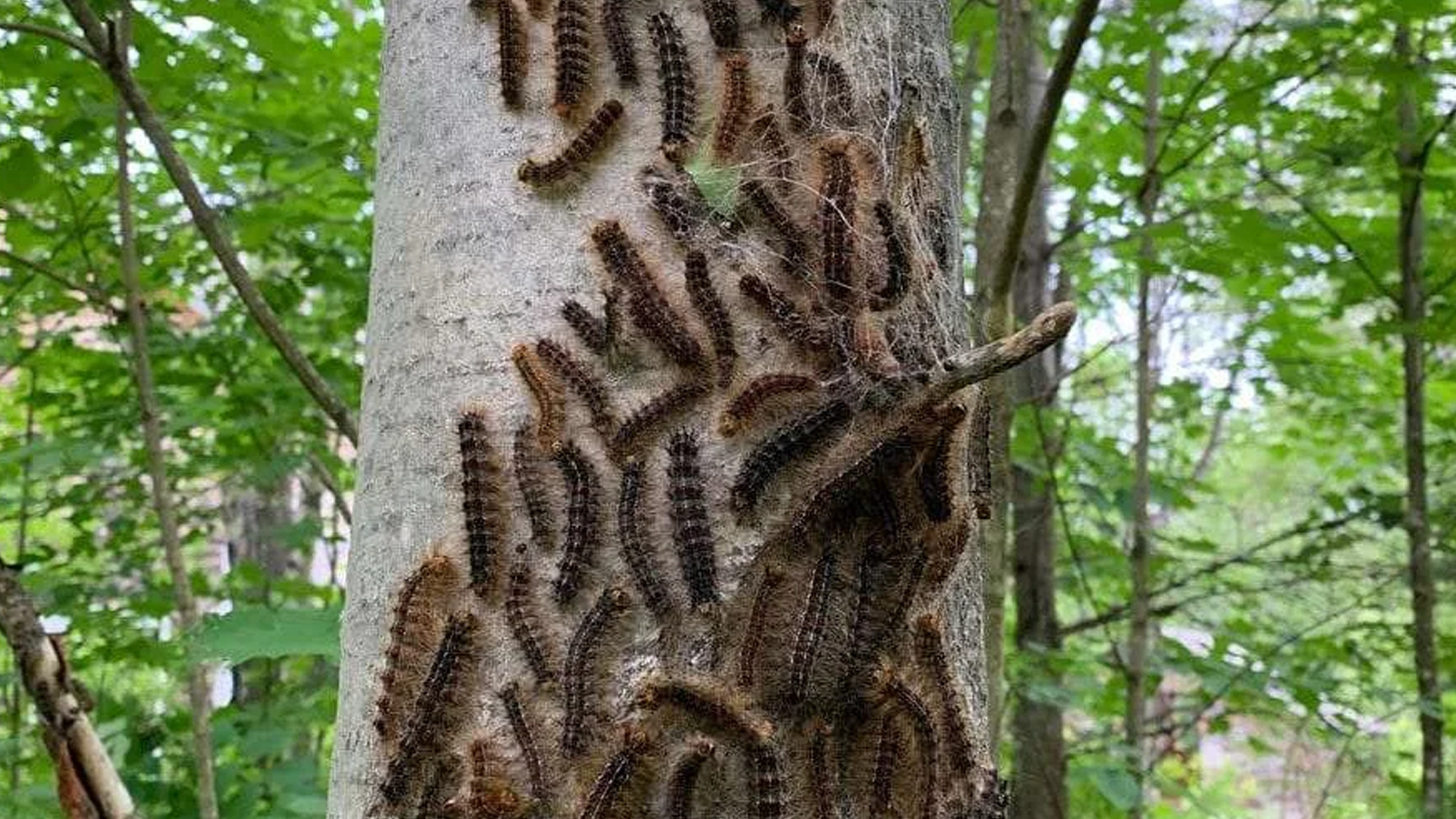
Spongy moth populations have been observed at outbreak levels for the past three years. This sustained elevated population pressure means that the insect is well-established across the region and will likely continue to pose a significant threat to forest resources. Properties that have experienced outbreaks are at higher risk of future infestations, and neighboring properties may soon face pressure as populations spread.
The Importance of Early Action
The most effective window for spongy moth treatment is early spring, when caterpillars are small and concentrated in tree canopies. As the season progresses and caterpillars grow larger and more dispersed, control becomes significantly more difficult and expensive. Early planning and scheduling of treatment operations ensures you can take advantage of this critical window.
Booking Aerial Spraying While Available
Professional aerial spraying capacity is limited and fills up quickly during peak season. Forest owners who wait until caterpillars are visible on their properties may find that contractors are fully booked and unable to fit them in during the optimal treatment window. DCNR is encouraging landowners to begin conversations with aerial spray operators now to reserve capacity for spring treatment.
Drone-Based Treatment as an Effective Solution
Drone-based aerial treatment has emerged as one of the most effective and practical options for spongy moth control on private forest lands. Compared to traditional manned aircraft spraying, drone treatment is more cost-effective, can operate in a wider range of weather conditions, and allows for precise targeting of problem areas. Drones can access properties that would be difficult or impossible for ground equipment to reach, making them ideal for forested or hilly terrain.
Why Timing Matters
Every year that passes without treating spongy moth infestations allows populations to grow and spread further. Trees weakened by multiple years of defoliation are at increased risk of death from disease and secondary pest infestations. The financial cost of replacing lost forest resources far exceeds the investment in proactive treatment. More importantly, untreated populations contribute to spread to neighboring properties and surrounding forests.
Taking Action
If you own forest land or woodlots in the region, now is the time to assess whether your property is at risk from spongy moths. Look for egg masses during winter inspections, monitor for caterpillar activity in early spring, and contact professional aerial spray operators to discuss treatment options and book capacity for the upcoming season.
Contact CNY Drone Services
CNY Drone Services offers professional drone-based spongy moth treatment for private forest owners and land managers across New York State and the Northeast. Our experienced team can assess your property, determine treatment needs, and execute effective control operations during the optimal treatment window. Contact us today to discuss your spongy moth management needs and reserve capacity for spring treatment operations.